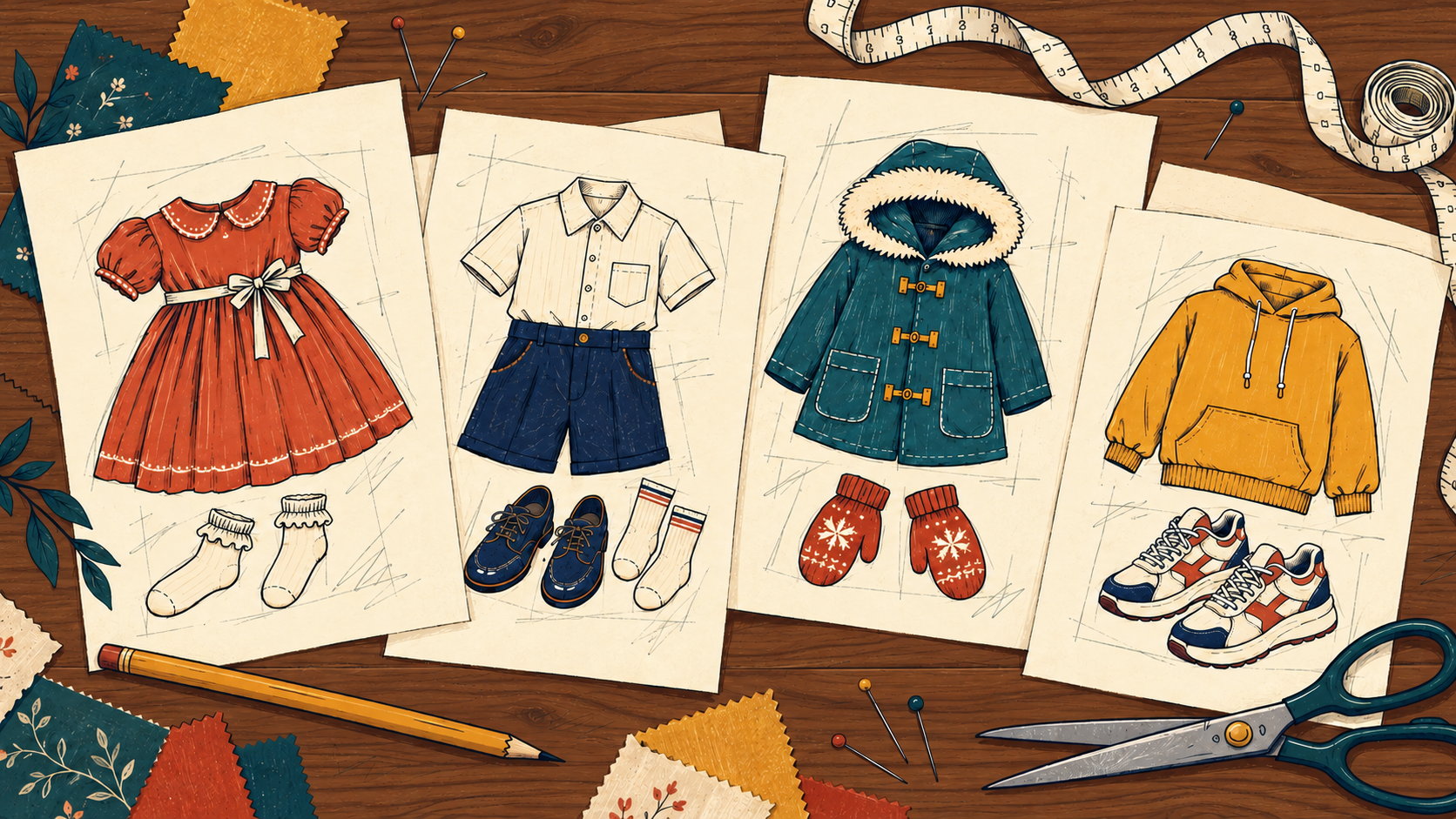
Open a family album and place an old photograph of a child beside one taken today. A girl in a gathered dress, ankle socks, and polished shoes may now be the grandmother of a child wearing trainers and an outfit she helped choose. A boy in short trousers and a buttoned shirt may be the grandfather beside a child in a hoodie. Before anyone explains the intervening years, the clothes begin to tell the story.
Someone remembers who made the dress, how the shoes pinched, or why the child refused to smile. Comparing styles becomes a conversation about growing up: the clothes adults chose for us, the outfits we eventually chose ourselves, and the people who helped us get ready.
For families with Caribbean roots, these photographs connect childhoods lived in the Caribbean with those unfolding in Canada. They show clothing responding to new surroundings, changing influences, and a child's growing independence. Turn the pages and two stories emerge together: fashion changes, and the child grows.
The First Clothes, the First Memories
Our earliest photographs show us before we could decide what to wear: a baby dressed for a portrait, a toddler standing unsteadily in a special outfit, or siblings in matching clothes. These pictures reveal the taste and circumstances of the adults around them as much as the children's personalities.
In some older Caribbean family albums, a girl's dress might feature a full skirt, decorative collar, lace, or ribbons. A boy might wear short trousers, a collared shirt, and shoes reserved for outings. Compare those pictures with children photographed today and you may notice softer silhouettes, stretch fabrics, playful prints, and trainers in settings where an earlier generation expected formal footwear. The contrast differs between families, giving each its own story to tell.
A child's memory of an outfit may differ from what the adult intended. The carefully chosen dress becomes the one that scratched at the neck; the handsome shoes become the pair nobody wanted to wear. Years later, a photograph recalls both the appearance and the experience of wearing the clothes.
Sunday Best, Then and Now
Some of the clearest changes appear in photographs of church, weddings, Christmas, and family gatherings. Earlier pictures may show children dressed with striking formality: pressed shirts, coordinated accessories, carefully arranged hair, and instructions to keep everything clean until the occasion was over.
Today, a family may dress children with equal care while interpreting the occasion differently. Trainers might accompany a suit, or a celebration might allow a relaxed outfit chosen for comfort and movement. Other households maintain formal traditions. Comparing the pictures reveals how families preserve, adapt, or reconsider their idea of dressing well.
The comparison also reveals changing expectations of childhood. How much freedom did children have to choose? Were special clothes expected to last through several occasions? Could children play in them, or did they have to sit still? The photographs recall those rules alongside the styles.
Made to Fit, Made to Last
Look closely at an older photograph and someone may explain that the dress was homemade, the trousers had been altered, or the outfit had belonged to a cousin. Behind the finished appearance was a story of sewing, saving, repairing, and making clothes last as children grew. A hem could be let down, a seam adjusted, or a garment passed to another child. The same outfit might appear in photographs of different siblings, becoming part of their shared history. Remembering who made or altered it gives those often-unrecorded skills their place in the story.
Families today may combine readily available clothing with hand-me-downs, second-hand finds, alterations, and garments made for celebrations. The balance changes, but the practical challenge remains: children grow, sometimes faster than their clothes wear out. A photograph catches the interval when an outfit fits, before later pictures reveal shorter sleeves or trousers that no longer reach far enough.
Growing Into a Style of Their Own
As the album progresses, the child gains more influence. Matching outfits disappear, a favourite colour returns, and particular shoes become essential. By adolescence, the child may have firm opinions about what they will wear in front of the camera. Changing fashion and personal growth become closely connected. An earlier generation may remember choosing jeans, a shirt, or footwear associated with a favourite performer or friends. Today's children may express similar preferences through sportswear, graphic T-shirts, or styles encountered through digital media. The garments differ, while the desire to belong or stand out remains familiar.
Place a parent's teenage photograph beside one of their child and the comparison can be entertaining. The younger person notices an unfamiliar silhouette or hairstyle; the parent remembers how current it felt. Beneath the laughter is recognition: both were discovering how clothes could express who they wanted to be.
A Caribbean Wardrobe Meets a Canadian Winter
In family photographs that span migration to Canada, clothing changes with the surroundings. Lightweight dresses, short trousers, and sandals give way to coats, knitted hats, gloves, and boots. Dressing for a warm afternoon becomes dressing in layers for an unfamiliar climate. A first picture in the snow may recall the novelty of winter clothing, a troublesome zip, or the feeling of being bundled into something unfamiliar. Later photographs show the child choosing a preferred coat or dressing like friends at school. Practical adaptation gradually becomes personal style.
For children born in Canada, the comparison may happen across generations. Their winter school photographs sit beside pictures of parents or grandparents growing up in the Caribbean. Family celebrations offer another connection: different surroundings, fabrics, and cuts, but a familiar attention to preparing children for an important day.
Carnival Costumes and Growing Confidence
Junior Carnival photographs offer another view of changing style. Compare different years and notice the materials, shapes, colours, and decorative details. A family may remember one presentation for its elaborate construction, another for freedom of movement, or a particular costume that became everybody's favourite.
The child changes too. An early photograph may show them close to a parent, uncertain about the crowd or camera. A few summers later, they may carry a larger costume confidently or enjoy performing with friends. Costume becomes a marker of growth, recording changes in expression, posture, and participation.
The images also preserve the people around the child: a relative making an adjustment, the designer behind the presentation, or a volunteer helping everyone get into place. They recall the work and anticipation surrounding the celebration, showing children growing within a cultural tradition that continues to evolve.
The Next Page in the Album
Looking back does not require us to declare the past more elegant or the present less meaningful. Earlier clothes reflected their circumstances, just as today's outfits reflect contemporary childhoods. Traditions endure or change as families move, tastes develop, and children gain a stronger voice in how they dress. Photographs make those changes personal. A shorter sleeve or a favourite pair of trainers belongs to a particular child at a particular age. An outfit recalls a birthday, a first winter, or a summer preparing for Carnival. Fashion gives memory its visible details.
When you next open an album, compare photographs of the same child at different ages with pictures of earlier generations. Notice what changed, what returned, and what each person remembers. Record who made the clothes, where the picture was taken, and any dates that can be established. Invite children to contribute; their observations may uncover stories nobody has thought to tell.
At REVERIE Faces, family photographs belong within the conversation about fashion. They show style being lived, outgrown, adapted, and remembered. Today's children will one day look back with the same affection and amusement, discovering how much of their childhood remains in the details of what they wore.
The clothes tell us what changed. The photographs remind us who we were.
REVERIE Faces | Fashion Forward
Exploring fashion as an expression of identity, heritage, creativity, and the human experience.